PeopleSoft Modernization Without the Mess:
Why Configuration Is Replacing
Customization
July 13, 2026
For years, PeopleSoft customers solved business problems the way most enterprise software teams did: customize it, document it as best you can, and carry it forward.
That approach worked when teams were larger, release cycles were slower, and the pressure to modernize was easier to manage. But most CIOs know the math has changed. Every customization now has a carrying cost. It must be tested, protected, explained, upgraded, and eventually defended when someone asks why a simple change takes so long.
The smartest PeopleSoft teams are not trying to customize their way into the future. They are looking for a cleaner path: use more delivered functionality, configure where possible, and reserve custom development for places where the business case is clear.
That is the practical modernization conversation PeopleSoft leaders should be having now.
Custom code is not free, after go-live
The problem with customization is not that it is always wrong. Sometimes it is exactly what the business needs. The problem is that custom code behaves like debt. It may solve an immediate issue, but it also creates an obligation that follows every update, every integration, every staffing transition, and every audit conversation.
Over time, that obligation drains the same team that is expected to handle security updates, reporting requests, integrations, process improvement, user support, and now AI readiness.
That is why modernization should not start with the question, “What else can we build?”
A better question is, “What can we stop carrying?”
Oracle is making configuration a more serious option
Oracle's recent PeopleSoft direction supports this shift. The value of newer PeopleTools and application image updates is not just that they add features. It is that they give organizations more ways to adapt PeopleSoft without creating another layer of custom code.
For example, Oracle's Page and Field Configurator gives teams a way to configure fields and pages without customizing delivered application pages or fields. That is a meaningful distinction. It allows the business to improve the user experience, apply role-based changes, and reduce friction while staying closer to delivering PeopleSoft.
PeopleTools 8.62 also reinforces the direction toward better usability and delivered modernization. Oracle highlighted improvements such as interactive PeopleSoft Insights in Fluid Pages and WorkCenters, improved Global Search, automatic incremental indexing, and system-wide configurable search options. These are not abstract technical improvements. They are the kinds of features that make PeopleSoft easier to use, easier to manage, and more responsive to how people actually work.
FSCM Image 55 shows the same pattern. Oracle's release highlights include sectionalized homepages, Notification Publisher, incremental indexing, Page and Field Configurator enhancements, and interactive insights in Fluid WorkCenters. In plain English, that means PeopleSoft teams have more delivered tools to improve the experience without defaulting to custom development.
The Modernization Strategy is Changing
The old modernization playbook was often too binary: keep PeopleSoft as-is or replace it.
That is not how most organizations think anymore. The more practical strategy is to modernize in layers.
First, reduce unnecessary customization. Then use delivered configuration tools to clean up common pain points. Improve the homepage and navigation experience. Surface better insights where users are already working. Standardize processes that have drifted. Move selectively, not dramatically.
For enterprise software leaders, this is the part that matters: modernization does not have to become a multi-year disruption to be meaningful. A series of well-chosen configuration and usability improvements can change how the system feels to users and how much effort it takes to maintain.
That is often where ROI shows up first. Not in the headline transformation project, but in fewer workarounds, fewer tickets, less retesting, faster onboarding, and a cleaner path through future updates.
Where Extensions Still Make Sense
Configuration should replace customization where it can. But it should not become a rule that prevents smart innovation.
That distinction is where experienced enterprise software leadership matters.
The point is not to build more software for the sake of it. The point is to make the right architectural decision. Configure PeopleSoft where delivered tools can solve the problem. Retire what no longer serves the business.
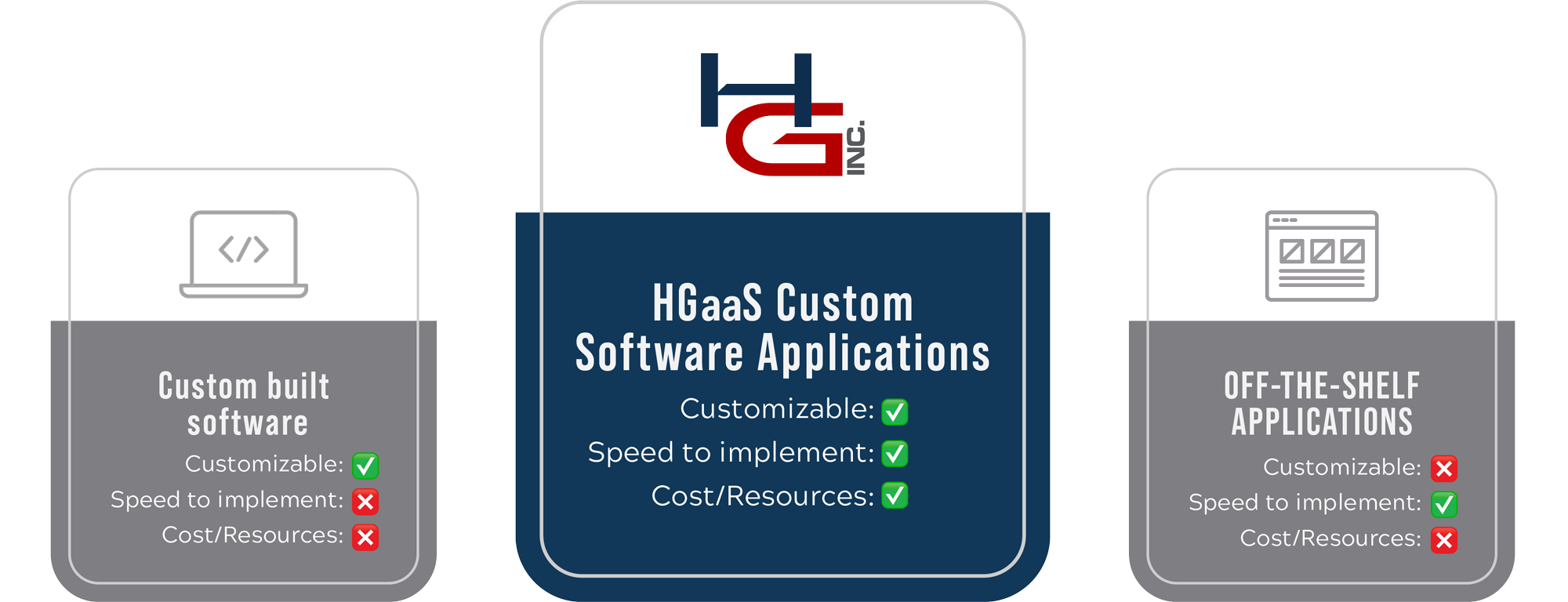
Instead of bending PeopleSoft around a process it was not designed to handle, organizations can build secure, web-based tools around the core system. HyperGen's HGaaS low-code development platform, for example, is designed to help organizations streamline internal processes through custom web-based solutions while maintaining enterprise-grade expectations around usability, security, and compliance.
That is where a strategic extension can be the better answer.
There will always be situations where PeopleSoft is not the right place to force a process. Some workflows are too specific, too cross-functional, or too dependent on external users, documents, approvals, accessibility requirements, or compliance needs.
HyperGen's Point of View
Modernization does not have to be messy to be meaningful.
For PeopleSoft customers, the smart path is not more customization by default. It is a disciplined mix of delivered functionality, thoughtful configuration, selective extensions, and experienced support. HyperGen brings that perspective across PeopleSoft, enterprise software, managed services, OCI, and HGaaS, helping organizations decide what to keep, what to configure, what to retire, and where to extend.
The goal is not change for the sake of change. The goal is to create a PeopleSoft environment that is easier to support, easier to update, easier to use, and better aligned with the way the business actually works.
That is the modernization conversation worth having now.